
Thousands of teachers are using studio-licensed music to teach their piano students. However, I still get emails from teachers every now and then who wonder “How can I afford studio-licensed music?” They mention that $9.99 for a studio license is much different than purchasing a $3.99 piece of sheet music. They are worried that they won’t get their money’s worth if they don’t have a large studio.
I want to provide you with ways that you can budget for the right amount of studio-licensed music for your studio. With so many teachers teaching students online, it’s important to be able to easily transmit new music to students. And with the economy affecting many piano teachers, having a library of music that can be printed from over saves a lot of money in the long run!
First, why is studio-licensed music such an incredible deal?
Part of the hurdle in figuring out how to budget for music is that often teachers don’t realize what an incredible value studio-licensed music provides. It really provides a huge benefit to both the teacher and student. Here are just some of the benefits of using studio-licensed music:
- You only have to purchase it one time. That’s it. You can re-download it any time you need to!
- It’s available to you immediately. You can pull it out at the lesson (in person or live online) and use it immediately.
- You are never waiting for parents to pick up or order the music. Parents just don’t have time to do that and they love when you get the music for them.
- Top composers are publishing only studio-licensed music instead of going through traditional publishers. This is mostly due to the fact that traditional publishers’ royalty rates are completely unfair to composers. See this article. Even the finest composers are shifting away from traditional publishers so the supply of studio-licensed music is going to continue to increase.
- You have an unlimited supply of that piece of music. When you purchase a studio-licensed piece of music, it means that you can continue to use the same piece for as many students as you directly teach for your entire lifetime of teaching. This is obviously an incredible deal!
- You only have to use the piece two times to get more than your money’s worth. One piece of typical sheet music retails for about $3.99. Usually you’ll have to pay shipping on top of that. So $9.99 is a good deal if you are going to use the music 2x. But it’s a steal if you are going to use it 3x or more. Think about it. Unless you are retiring this year, I can almost guarantee that you’ll use the music more than 2x. See below for why…
- You can think outside the box. A piece of late-elementary studio licensed music can be used not only for your late elementary students, but as sight reading for your mid-intermediate student, one-week pieces for your early intermediate students, and challenging pieces for your elementary students. You don’t have to be confined to the level or one student because you have an unlimited supply of the piece!
- Easy pieces can be used for sight-reading material. Carrying on with the idea of the previous reason, you can provide tons of music for your students to sight read with studio-licensed music. We all know that in order to get better at sight-reading, students have to read more music. It’s why the 30/40 piece challenge is so popular! So, why not use all those studio-licensed pieces that you originally purchased as recital pieces, as sight-reading for slightly more advanced students. For example, your EE (early elementary) studio-licensed music can be used for E (elementary) students. Your E studio-licensed music can be used for LE (late elementary) students. Your LE studio-licensed music can be used for your EI (early intermediate) students, etc.
- Studio-licensed music is perfect for the 30 and 40 piece challenge. Teachers are always worried about how to get their intermediate students able to learn 30 and 40 pieces because much of their music takes so long to learn. But again, you can easily print easier studio-licensed music every week for your older students. They can learn these in 1 week and use them to achieve their 30 and 40 piece challenges. These easier pieces count for students because again, the more music a student breads (even at slightly easier levels), the more their sigh-reading can improve. Short Sheets® are perfect for these types of challenges, and each studio license actually includes three on-page pieces!
- Here at ComposeCreate®, we even provide you with a well-organized record of all your studio-licensed purchases in your ComposeCreate® account. So more wondering where you have filed it or if you have to purchase it again. You can just log in and re-download it. We have your back! Just log into your account to do any of these things!
I could go on and on about the benefits of studio-licensed music! Feel free to share your own thoughts about how beneficial this format of music is for you in the comments below. But you can easily see that there are scads of reasons why thousands of teachers are using studio-licensed music.
So How Can I Budget for Studio-licensed Music?
There are multiple ways of doing this, so please choose the one that best fits your studio’s needs.
Budget With Tuition Dollars
Many teachers who are already convinced of the merits of using studio-licensed music just set aside a certain percentage of their tuition dollars for the purchase studio licenses. It’s just a part of doing business for some teachers just like purchasing paper, office supplies, motivational rewards, or teaching tools.
Budget with Registration Dollars
Many teachers set aside money that comes as registration fees for studio licenses. If you’re not sure how to implement a registration fee, you can read about it here! In a $50 registration, you might set aside $15 per student for studio-licensed music. That doesn’t seem like much, but if you remember how every studio-licensed piece of music can be used for multiple students, that student will be getting far more than $15 worth of music in the year.
For a Smaller studio
To illustrate, let’s say you have a small studio of 15 students. If you set aside $15 per student for studio-licensed music, that gives you $225 every year! And that $225 of music can be used for more than just one student. Let’s say you use that money to purchase 20 piece of studio licensed music (most pieces only cost $9.99). Even though Zoe only paid $15 for music, she will get multiple pieces of music (at her level and below her level…remember the benefits of using the music as sight-reading and one-week pieces) for her money – far more than $15 worth! Plus, whatever you purchase this year, you can use for next year as well!
For a Larger studio
If you have a larger studio, imagine what you can do with $15 a student. Or even $20 a student! If you have 40 students, then that’s $800 that you can use to purchase a lot of studio-licensed music, rhythm curriculum, games, recital templates, the list goes on and on. Plus, whatever you purchase this year, you can use for next year as well.
What if I’ve Already Charged Registration This Year?
Good question! Here are a few ways to handle it this year:
- Set aside a certain budget from your tuition or already-charged registration for studio-licensed music this year. Then next year, you could increase your registration fee slightly.
- Tell parents you will be charging them $15/$20 in August or September that will cover the cost of supplementary music for the year.
If you go for option 2 and charge a separate additional fee this year, highlight how what you are doing benefits the parents, the students, and makes their life easier.
Highlight the following:
- This helps you with budgeting because you will not have to reimburse me for any music except method books.
- It will save you time and decrease your tasks since you won’t have to order music – I’ll take care of it for you.
- I’ll be able to email the music to you or your child so that they can immediately print and have it at the lesson within seconds.
- It will give your child the best in new piano music.
- It will give your child much more music for their $15 than was possible with traditional publishers. Because I can use a studio-licensed piece of music over and over, that means that I can use the same piece for multiple students – giving your child much more music to sight-reading, learn, and therefore help them make faster progress.
- The best composers in piano pedagogy music are now selling their music directly to teachers in this way. So I’ll not only be able to get the best music from the best composers, but it will also help these artists make a living so that they can continue to make fantastic music for students.
Once you begin using studio-licensed music, you’ll see how convenient it really is. Since so many of you are teaching online, it’s even more convenient and helpful to be able to have the same music in front of you that is in front of your student.
Get the Best Deals on Studio-Licensed Music:
The best way to get the best deals on studio-licensed music is to know the “sale strategies” of a particular publisher. We try to be very consistent with ComposeCreate® music so that you know how to always get the best deal. We rarely (pretty much never) have coupons because it’s just too easy to forget to plug that coupon code in and nobody likes that feeling! So instead, we are completely up front about our sales strategy. Here it is:
- New pieces are always on sale the week that they are released. This sale lasts through midnight Friday of that week. So you will always get the best deal if you purchase the music at that time. That’s why our Tuesday newsletters are so important!
- We bundle music together and then discount it for added savings. The bundle’s is always the lowest price the week it is released (in keeping with #1), but we almost always have the bundle on sale for some kind of discounted.
- Our webinars are special times to get music on sale. We often put together special bundles for the webinar or even release big new sets of music for the webinar, so always try to attend those if you want fabulous deals.
What other thoughts do you have about the benefits of studio-licensed music? Do you have other ways that you budget? Please share in the comments below. Thousands of teachers read these blog posts, and your comment could be super helpful to some of them!
Share on Facebook! (I sure appreciate it!)
Here Are Our Most Popular Discounted Bundles:
-
 Price range: $21.98 through $65.94
 -
 $15.99
 -
 Original price was: $32.97.$29.99Current price is: $29.99.
 -
 $15.99
 -
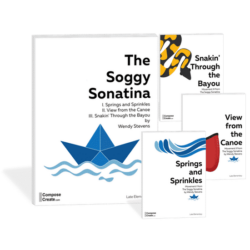 Original price was: $35.97.$29.99Current price is: $29.99.
 -
 Original price was: $43.96.$39.99Current price is: $39.99.
 -
 Original price was: $74.95.$66.99Current price is: $66.99.
 -
 $15.99
 -
 Original price was: $29.98.$26.99Current price is: $26.99.
 -
 Original price was: $32.97.$29.99Current price is: $29.99.
 -
 Original price was: $179.83.$159.99Current price is: $159.99.
 -
 Original price was: $44.97.$37.99Current price is: $37.99.


Wendy, this was incredibly helpful! So often students don’t like enough of the pieces in a particular solo book. But charging parents a $15-20 fee for supplementary studio-licensed music makes it easier to choose just the right solo for each student. And I liked your suggestion of using the pieces for sightreading and for the 30/40 piece challenge. Thanks so much for the clear explanation.
I’ve been a dedicated purchaser of Wendy’s music for the last few years and love the library I’ve built up. It’s so handy to have her terrific music on hand just waiting for the right time to whip out a particular piece for a student. Even absolute beginners can play one of her terrific rote pieces and sound impressive at their first recital.
I charge each student a materials fee which covers all of my studio-licensed music and everyone benefits from it. Wendy’s music always goes down a treat with my students and their parents. They think I’m brilliant for pulling out Wendy’s music and I’m in no hurry to persuade them otherwise! Buying Wendy’s studio-licensed music is really an investment in giving your families a more creative, professional and relevant impression of who you are as a teacher.
I just used the pieces from the “At the Fair” collection for YOYO (You’re On Your Own) pieces for a student who is almost ready to start staff reading. He loves them!
Wendy – can I use some of this information, and your verbiage, in my studio blog and/or on my website? I have some parents that will wonder exactly what this means and why I’m increasing their registration fee. If not, I totally understand. Thanks for considering it.
Sally
Hi Sally,
Oh yes, feel free to use this verbiage, these bullet points, or whatever you need to in the article to help parents see what a good deal this is for them! Thanks for asking!
Ah thanks so much for your kind words, Flora! I’m so glad this is such a gift to your students and that they think you are brilliant for pulling it out…you are, you know! It makes me so happy to help teachers look amazing because that’s just what you are!
Thanks for your kind words about my music, Flora. You are such a wonderful supporter!
Sure thing, Liz! I’m glad it was helpful.
The new Short Sheets that are late elementary, early intermediate, mid intermediate, and late intermediate that are coming out NEXT WEEK should be especially helpful for assisting your more advanced students to achieve the 30 and 40 piece challenge! Stay tuned!
Thanks Wendy, it’s awesome to have that list of the benefits of studio music to share with parents, to help them know how great studio-licensed music really is! You always have our back, and I really appreciate that!
One thing that has me hesitant to do this, is that I don’t know how this all works with taxes and income. In the past I have purchased books for students, and they reimburse me for the exact amount I paid, so I never report any of that on my taxes. Only my own books that I keep go on my expenses. If I buy studio licenses and have a materials fee, it doesn’t balance out, and I could be generating income on selling a product which is a completely different thing.
Hi RB,
I would just claim the materials fee as income, and then all your studio license receipts as expenses. That should account for everything unless I’m missing something. Hope that helps!
If i wanted to charge a 20.00 fee for studio licensed music, but also wanted to add a book fee that would cover hard copies of method book, what reasonalble amount would that be? I dont charge a “material fee” or a “registration fee“
That’s a good question, Louise, but hard to answer. What I’d do is take the average of all the method books (So if you used Piano Safari for some students, you’d need to add all the books they’d need for one level together and then do the same for Piano Adventures and Hal Leonard and then you’d average those 3 big numbers together). But then, you’d have to factor in…do any of your students go through more than one level a year? If only a few do, then you might just increase the price a little to account for that, but it’s so hard to know – that’s why it’s an average and just a generalized book fee.
Sorry I can’t give you a firm number, but I think if you’ll do that math, you’ll come out with a better idea of what is reasonable and true to costs.
Hope that helps!
Hi Wendy,
$25/student has been a wonderful solution. I have a plethora of music that I’m also genuinely excited for. I’ve realized that teachers need the new music just as much as the kids!
I am curious to know if your answer to RB’s tax question has been run by an accountant or tax attorney before I do my bookkeeping.
Thank you for both the wonderful music and this helpful article, it helped me take the leap!
I have quite a few Compose Create digital downloads in my music library and for me it works well to factor in an annual Library User’s fee when I determine my tuition charges for the school year. This covers all digital downloads I use with each student and allows me to buy new music publications (especially new music books that aren’t digital downloads), which I lend to students for additional sight reading. For students who start later in the school year I usually pro-rate this library fee.
Yes, Yes, YES to all of the above! For those of you that don’t use Office Depot or Max and can’t benefit from the discount card she released in today’s email, be advised that the UPS store gives you 20% off all printing for AARP or AAA insurance card-holders! Saves me HUNDREDS each year!
Thanks so much for the discount card!
Absolutely! I hope that’s helpful!
I’m wondering what is the standard for most teachers regarding printing? Do you find it more economical/efficacious to do all the printing yourself or do you use an outside source? I know someone mentioned OD/OM but seems like an extra step/time and expense outsourcing it. I’ve usually printed from home or library but on the flip side, I’m always worried I’ll use up the ink cartridges too quickly cause I know they’re not cheap.
Hi Linda,
That’s a great question! I don’t really think there’s a standard for what teachers do. I know many who do both. I think it kind of depends on your goal, purpose, and style of planning. But I think most teachers say that for pieces, it’s just too convenient to print at the lesson on your home printer since you can pick a piece and print it right away. If you plan ahead more, then doing it at a print shop is nice as those printers are just much better. If you print at the print shop, you can charge your students for the price of the printing (not for the piece itself as that would be resale which is prohibited). But for your home printer, just make sure that your registration fee or tuition covers the price of an extra set of cartridges than what you usually use in a year. If that’s not enough, then you can adjust the next year.
Wow, this article helps so much! I already charge a registration fee to help cover recitals, student incentives, and office supplies. I’ll just add that bit of extra to cover the studio licenses. Yay! My students get so excited when I tell them Wendy has new pieces out. Thank you, Wendy.