
Workshop Now Available!
“Have You Forgotten What It’s Like to be a Child? $39
Yes, we’ve all forgotten what it’s like to be a child. And because children’s minds work differently than ours, we often don’t know how to engage them. We often get frustrated and impatient with them. Sometimes we want to scream and pull our hair out some weeks after teaching them! Why don’t they remember what I taught them last week? Why don’t they like that piece? Why are they so picky?
As I started writing elementary music year ago, I realized that I needed to get inside the mind of children to figure out how they work! How do they think? What do they like? I’ve become passionate about helping other adults like you understand what it’s like to be a child.
Because when you understand especially these 5 characteristics that I’ll present in the upcoming workshop, you will feel excited and equipped to teach (and even compose) much more effectively!
This online workshop is professional quality and appropriate for ALL music teachers (not just piano)! You can watch it by yourself once or watch it twice or re-watch sections of it, all in your living room. You’ll have private, individual access to it for 3 months! It will be priced very affordably and I know you’ll be energized and motivated to teach because of it!
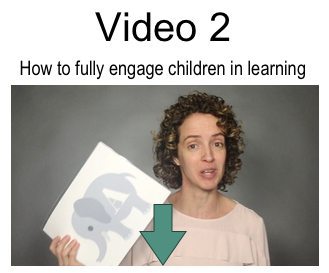
How to Fully Engage Piano Students in the Learning Process
Now, what I’ve written below is NOT in the video, but rather supplements what’s there. So, if you haven’t watched it yet, watch it now!
So, you got a teaching idea from a conference or a teaching friend and implemented it right away! Bingo! Your student learned their scales much more effectively.
You then start to use that teaching idea over and over again, thinking that it’s the best way to engage piano students. Seems like a fine strategy!
- Get an good idea.
- Implement and test.
- Keep using the great idea.
But, the problem is that we too often become complacent, think that we are really engaging our students, and miss the next step in engaging piano students. We crack the code of engaging piano students just a bit and then don’t realize that there is so much more to decode!
It Reminds Me of My Sister’s Fashion Lessons

My sister is a true fashionista. She has gigs from major brands where she gives advice on fashion and self-image, and writes for her highly trafficked blog. A few times a year, I ask her to come help me with my wardrobe. She tells me what to throw away (gulp), what to keep, and then what to buy so that I don’t look like I stepped out of a previous decade. She puts together combinations of clothes and I take pictures of each combination. Every time I wear these combinations, I feel really chic!
I also start to feel very confident that I know what good fashion is.
But because she follows me on social media, sometimes I get a text from her that says, “Uh…where did that come from?” It is then that I start to realize that, while I applied the “beginning fashion lesson” appropriately many times, there is still much to learn!
It’s Like That in Piano Teaching
Yes, we should implement the ideas we learn from other teachers, but we should always be asking, “Is there a way to more fully engage piano students when I teach ____?” There is always more to learn on how to fully engage piano students in lessons!
Download the Accidental and Elephant Cards Here:
You might be wondering what in the world engaging piano students has to do with accidental and elephant cards. So, be sure to watch the video! You can also get your own little elephants on Amazon. Then, download the accidental and elephant cards here!
↓ Click, fill in, then check your email in a few minutes!↓
Read More on Engaging Students:
- Free Monkey Music Theory Games for Elementary Students (lots more ideas on how to use your elephant cards too!
- Are Your Students Brains Bored?
- Music This or That – A great way to engage piano students or music classrooms at the beginning of the year. (Works for groups and private lessons.)


Movement really is the nature of a child. I enjoyed going up and down the stairs to show how the notes move. The animals are friends that seem to give children a sense of compassion and trust while learning. Beautiful when you explain how their elephants help them remember, and how the mice can quickly move, to make learning active.
Thank you, Wendy, for the wonderful resource. Since my stairs are close to my studio, after using the cards and calling out sharp, natural, etc. I think I will see if students can move according to pitch.
Sometimes when students get sharps and flats mixed up, I tell them that sharps have sharp points.
Another home run video, thanks Wendy. I definitely tend to be the boring teacher you describe 🙂 It’s time to mix it up a bit! The cards look great I’ll be trying this out for sure in some lessons next week.
Awesome! Thanks for your kind words, Brian. I’m glad you can use these things. Thanks for letting me know!