
We asked a very important question for Idea Share #20: How do you teach students to practice at home?
We often hear that ComposeCreate® webinars leave our community of teachers feeling inspired and re-energized. In part, that spark comes from our Idea Shares, where everyone is invited to contribute their own creative approaches to teaching by answering a special question we present. And even though we’re connecting through a chat rather than in person, there’s still plenty of laughter, encouragement, and joy as we learn from one another’s wisdom!
As with Idea Share 18 and Idea Share 19, all of the wonderful ideas are shared directly in this post, no PDF download required! But before we jump in and give you the answers to our question, here’s a quick recap of the new releases from “Masterpiece Music,” 2026’s January webinar.
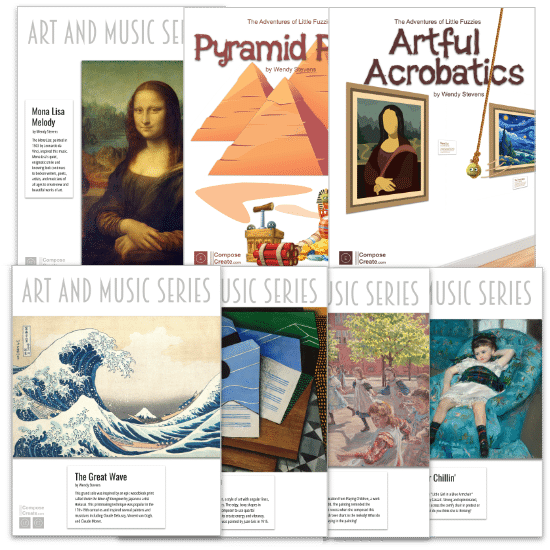
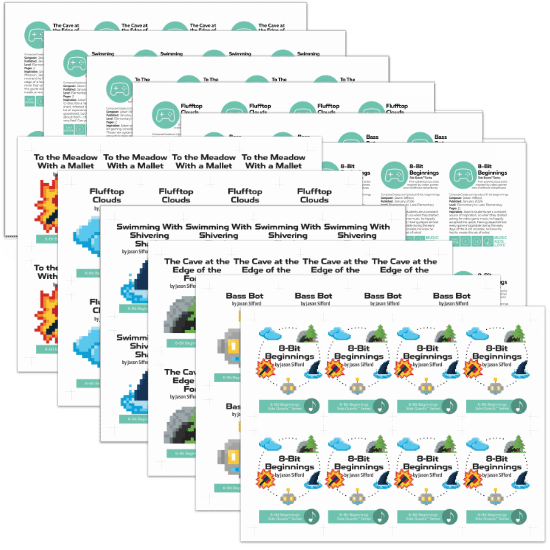
Wendy Stevens and Jason Sifford brought us two new series: the Art and Music Series and Side Quests™ Series!
- The January 2026 Bundle features seven artful pieces from Early Elementary to Intermediate levels
- Two new Little Fuzzies pieces: Both included in the January bundle, but also available in their own bundle
- 8-Bit Beginnings by Jason Sifford kicks off the Side Quests™ series with a collection of 5 video-game inspired short pieces for Elementary students
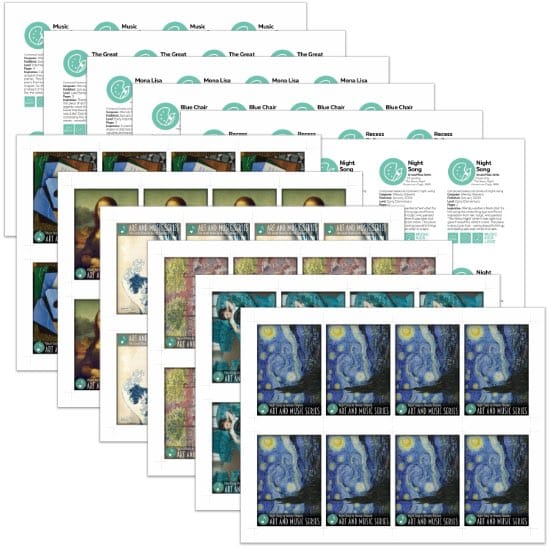
- ALL of the new pieces have Music Achievement Cards!
Read more about the artful new pieces and many more fresh products for your studio here. You won’t want to miss these fabulous new releases!

Idea Share #20 Question
We asked teachers, “How do you teach students to practice at home?” Rosalie said something many of us probably think on a regular basis: “I need the Idea Share to motivate my students to practice. I’ve tried so many things!” We hope that you learn some new tips and tricks like we did at the webinar, and leave feeling empowered!
Featured tips for teaching students how to practice
Short on time? Here are a few hand-picked tips from your ComposeCreate® community of teachers:
- Jason: To help beginning students find their starting note, I draw a quick keyboard at the beginning of their pieces, or at any point in their music, with an arrow pointing to the starting key!
- Debbi: I found that it started with the parents – helping them know what practice is and isn’t. Many of the parents think practice should sound like performance and that is not true!! So teaching the parents first is helpful. Then we can work as a team to help the students learn.
- Rosalie: I tell my students if their families get sick of the song they’re playing, they aren’t practicing correctly. They should only hear the whole piece occasionally during the week. Mostly, they should break the song into smaller sections.
- Robin: Drive-by practices (whenever they pass by the instrument, play something) — and I have a list with dice, so they shake a dice to see what to practice (dynamics, hardest measures, right or left hand, etc.)
- Cheryl: I tell them when they pass by the piano to just work on one thing for 5 minutes. Or start with the last page of the piece first.
- Katherine: With my older students we build a piano practice tool kit beginning with x3 practice using coloured pegs on their repertoire, which they move from one side to the other.
- Cherwyn: Interleave your practice – practice a little bit of one piece, then go on to another piece and practice that for a bit of time, then return to the first one and practice again for a bit. (Or interleave more than two pieces in one session.) Helps maintain focus and also helps consolidate the sections being practiced.
Everyone’s tips for “How do you teach students to practice at home?”
- Robin: I do a big variety of things. One of them is a practice Bingo, with some sort of teensy prize at the completion of it.
- Andrew: I give them specific sections of the piece(s) to focus on.
- Ann-Marie: Use the word “play your piece” more than the word “practice.”
- Debbie: Practice hands separately. And work from the last line to the first. Establish first note to start practice.
- Robin: Here’s something I’ve looked for for twenty-five years, and finally I found: a little hand puppet of a turtle! It has the perfect size for small hands, and gives them the feel of a good hand shape. AND it has the plus of being a turtle, which reminds them to practice slowly!
- Andra: Chunking and rolling a dice to pick which chunk to play next. Fun + interleaved practice both!!
- Kathy: Every lesson we practice a piece together, sometimes a new piece, sometimes an in-progress piece. I use the Piano Safari Sight Reading & Rhythm cards to go through prep/practice steps before starting a new piece.
- Lisa: Attach practice to something else you do daily, practice before breakfast…
- Stephani: I like the 2/7 rule. Practice 2 measures, 7 times. I also gave my students a set of dice one Christmas with a list of games they could do. Some were tempo, dynamics, or octave.
- Amy: I tell my students to play the things from their lesson as soon as they get home from their lesson or from school (I teach at a school). That helps them remember what we went through in their lesson.
- Melissa: I try to be explicit in what to do at home: work on m.1-3, play 3x correctly, then try the next spot (they are usually marked). I try to give an area of focus (notes, rhythm, dynamics, etc) so they know what is first priority. I remind them that it’s okay to mess up and redo, just redo it more than once. I also teach how to break down a piece or section (HS, spot work, etc). Parents don’t get to be involved unless I ask them to (parents often cause tension during practice). I try to use age-appropriate expectations (former Kindergarten teacher here)!
- Pat: I tell my students the usual tips: spot practice the hard spots, break the piece in small chunks and play it 3 times in a row, use a metronome, to gradually get the tempo faster, block arpeggio passages.
- Shelley: I found a keyboard stamp that I sometimes use to help students find their starting place. (I just throw it on the page with a stamp pad.)
- Cherwyn: Figure out your best fingering from the very beginning and then use it consistently every single time. Also, practice for short durations but several times per day to stay close to the piano and to the music. Helps maximize gains.
- Linda: I tell my students that playing through a piece is not practicing. They need to practice on sections and practice chunks which I instruct them to do.
- Lisa: My tips depend on what it is they need to learn in that moment… but bouncing off others’ ideas: (1) learn the end of the piece first (even if it’s just the final chord, or note) because NOTHING feels better than knowing how your piece ends; (2) use a timer when practicing. Start with five minutes. When the timer goes off, make yourself go do something else for 5-10 minutes – then go back to the piano. If it’s an older kid, they could start with 8-10 minutes. The idea incorporates both the desire to want to do more (b/c not much can be done in that amount of time) as well as interleaved practicing. The time can grow into longer segments, and I encourage kids to take their reading and math homework to the piano and rotate through several subjects. (3) I encourage practicing before homework because a timer can be set and practice has a true finish, whereas homework? No one knows how long it will take! LOL! (4) Learn the hard bits of a piece first – sometimes that means the B section because it only gets practiced once when playing through the whole piece. How much? Try one measure plus one beat to start. (So, final measure first, then penultimate measure through end second, and keep working backwards). (5) Isolate moves and practice them both forwards and “backwards” in the music to physically secure the distance. Often this means just working on two beats.
- Elaine: I ask my middle and high school students to decide what they want to accomplish in the time they have. In other words, have a goal in mind for each practice session, even if it’s just 5 minutes of time.
- Carol: Focus on the challenging part first. Hands separate if needed.
- Rosalie: Research has shown that human brains can only concentrate for 5-10 minutes before getting tired. I have them set a timer and when it goes off, they are to get off the bench, take a few deep breaths, walk to the kitchen for a COLD drink of water. No more than 1 minute or so. Then get right back to it.
- Pamela: I give bead counters (from The Practice Shoppe) to all my students, and we practice that process in lessons, so they can use the technique confidently at home.
- Christina: Practice in sections, usually 2-4 measures at a time, and repeat a bunch, focusing on notes AND rhythms first, and then as soon as possible, articulations, and finally, dynamics.
- Judith: I use the strategy of moving the object from one end of the piano to the other for repetition.
- Cheryl: I try to go through the basics at the lesson on how to approach the piece. The rhythm, note range, reason for fingering. If it’s difficult, we break down the piece in terms of what to learn that week, what to focus on. I show them in studio first. Practice the difficult spots several times, then add the immediate measures around the problem spot, then the whole section. Then I encourage them to do the same at home. When they see how fast they learn the “hard” part, they get excited!
- Robin: Master the final measure first. At a certain point, play through without stopping no matter what. Harder than they think! I also try to make it super easy for them to get going.
- Dixie: I choose 3 or fewer things to fix or work on in a piece. Then I recommend playing the section correctly 3 times–not in a row–just until they’ve played it 3 times correctly. Then extend by adding a measure/measures before or after, practicing again correctly 3 times. Then play the piece through correctly 2 or 3 times. Once they know the piece, I ask them to play through without stopping.
- Kelli: For digital music, we may even print and cut it out, so they can only work on certain measures at a time. Then we put them together like a puzzle. We’ll color code their music for various things, label sections and their assignment may be that particular section. We also work backwards frequently, so they learn the end portion first. Also, with older students, we make a goal(s) together before they leave. They have more say in what they think they should work on.
- Betsy: Break the piece into sections, label A, B, A1, etc. and then learn the sections that appears most difficult first. Repetition!! Roll a die or use the 3-in-a-row game.
- Judith: Use sticky notes to cover the measures they don’t need to do for that week. Less confusion. It isolates JUST those bars to cover.
- Laura: This fall in my studio, I gave each student a little “SMART PRACTICE” tip card to keep at their piano. When they sit down to practice, instead of just playing through it once, there are prompts to ask themselves, starting with “Always ask: What Can Still Be Better?” Then there are bullet lists of things to think through (accurate notes, dynamics, rhythms, tempo, etc.). Basically a blueprint for practicing and really listening/assessing what needs more attention as they are working.
- Cheryl: I assess kids individually and try to find what may work for them. I ask them too what would work. Like we make an agreement and talk about if the next week.
- Annette: I walk through the steps during lesson time then I have them repeat the steps so they can do it on their own. We work on hand position, count before you play, then if there is a slow down section that means you need to work on that. I also have a practice check off sheet that they can color in every 5 minutes for the early students.
THANK YOU to our community for coming to the webinar and sharing your best tips for teaching your students how to practice at home!
What’s a Piano Teaching Idea Share?
During each webinar, we pose a question designed to spark ideas and support piano teachers everywhere. After both webinars, we gather all the responses and share them as a curated list or, in earlier Idea Shares, a free downloadable PDF. That way, you can tap into the collective creativity of the ComposeCreate® teaching community any time!
Check out all the Idea Shares here:
- Piano Teaching Idea Share #1- Encouraging books, creative ideas, injecting energy, online games
- Piano Teaching Idea Share #2 – How teachers are lightening their load
- Rhythm Idea Share #3 – Teaching rhythm
- Piano Teaching Idea Share #4 – Gadgets and gizmos, lifesaving ideas, marketing ideas
- Piano Teaching Idea Share #5 – Taking care of yourself and Energizing Ideas
- Piano Teaching Idea Share #6 – What are you excited about and Best Marketing Tips
- Piano Teaching Idea Share #7 – Student holiday gift suggestions and Making the holidays less stressful
- Piano Teaching Idea Share #8 – What new things are you doing and Adding a Composer of the Month to your studio
- Piano Teaching Idea Share #9 – How does surprise enhance students’ learning?
- Piano Teaching Idea Share #10 – How would you introduce this piece to students?
- Piano Teaching Idea Share #11 – How can we make holiday recitals easier?
- Piano Teaching Idea Share #12 – 2024 Excitement and How do you connect music and art?
- Piano Teaching Idea Share #13 – Favorite Office Supplies for Teaching
- Piano Teaching Idea Share #14 – What is working well in your studio?
- Piano Teaching Idea Share #15 – What is your favorite holiday or Christmas album?
- Piano Teaching Idea Share #16 – How do you get your students to practice?
- Piano Teaching Idea Share #17 – How do you engage parents in their students’ practice?
- Piano Teaching Idea Share #18: Halloween Lesson Ideas
- Tips for an Engaging Recital – Idea Share #19
Want to be notified when we have new idea shares and webinars?
If you are a piano teacher and want to know when articles like these get published, please join our email newsletter! We send out weekly newsletters with articles, new music notifications, free webinar opportunities and free teaching resources! We’d love to have you a part of the ComposeCreate® community.

