
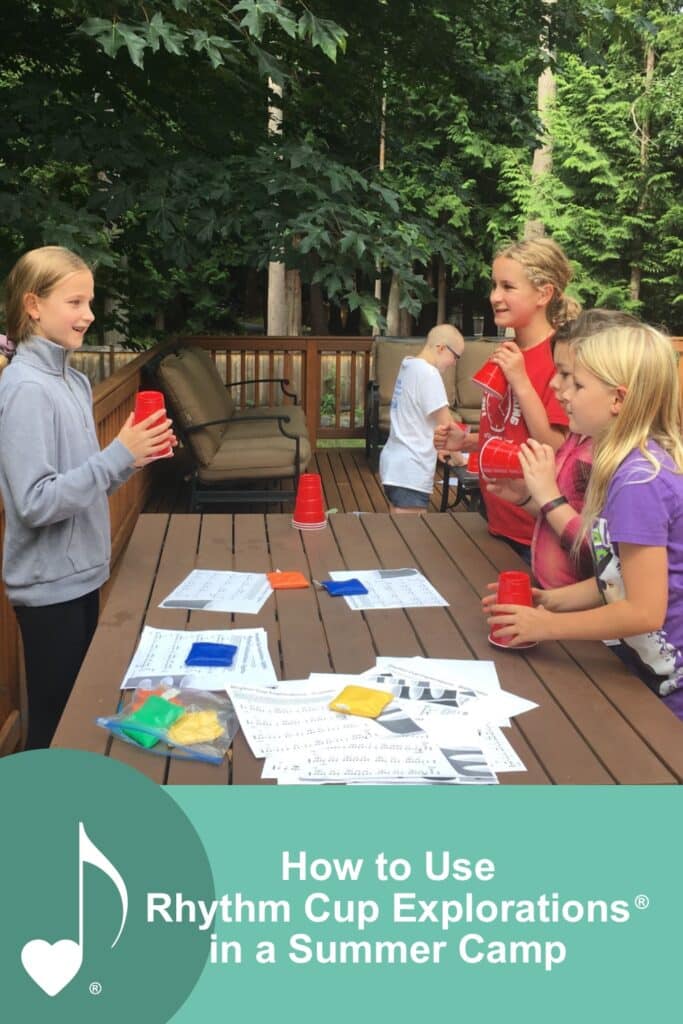
Summer camps can be a wonderful way to boost your income during the summer months. It’s also a great way to keep students engaged when regular lessons aren’t happening, and an excellent strategy for boosting fall numbers.
But what do you actually do during a summer camp? We have some ideas for how to use Rhythm Cup Explorations® in a summer camp!
Why Rhythm Cup Explorations®?
Rhythm Cup Explorations® has been used with great success by teachers’ summer camps partially because it was designed to work in both a private AND a group setting. Students of all levels can be engaged and learning at the same time! Here are twelve ways you can use Rhythm Cup Explorations® in a summer camp, categorized by type. Pick one, two, or all if you have lots of time to fill!
Under the ideas, you’ll also find some thoughts regarding: how much to charge, how long camp should be, and other things to consider to get your summer camp off the ground!

Outdoor, active ideas using Rhythm Cup Explorations® in a summer music camp
- Take the cups outside: Doing rhythm cups in a park shows students what a fun teacher you are! It may even pique the interest of parents watching, and get them interested in lessons or next year’s camp. Kids love performing fun things like Rhythm Cup Explorations® in a low-key, public setting.
- Use squirt guns: Have pages of Rhythm Cup Explorations® printed and laminated, and then post them on trees. Give students squirt guns, tap one of the rhythms and then have students use the squirt gun to “tap” the correct rhythm on the tree! See who squirts the correct rhythm first!
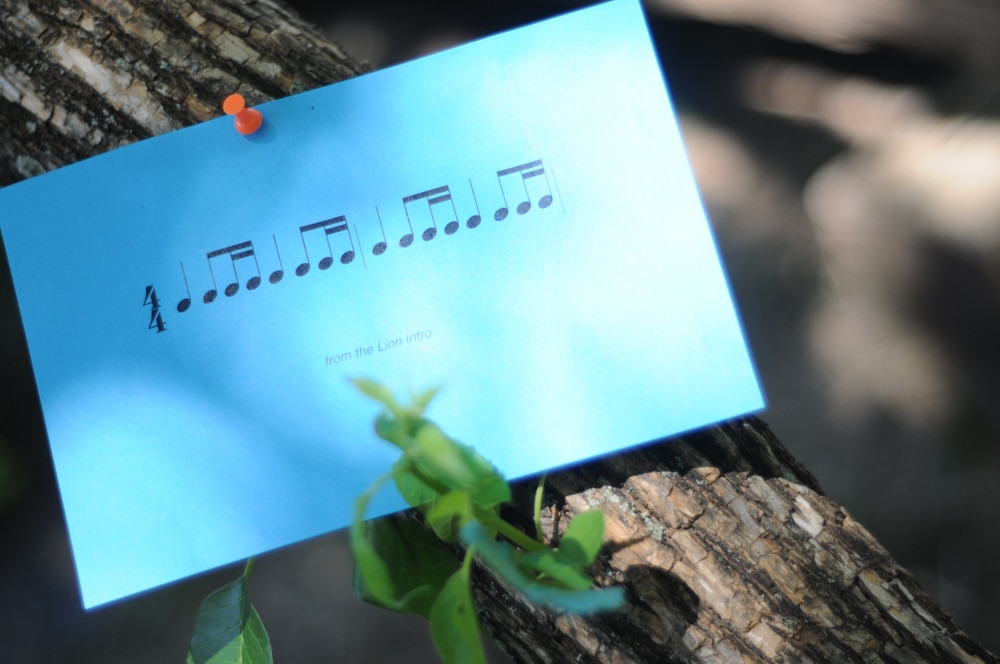
- Dance Party: On several pieces of 8.5×11″ paper (laminated if possible), print out quarter, half, etc. notes depending on which Rhythm Cup Explorations® exercise your students are doing. Instead of clapping the rhythm, students jump to the note value in the exercise, in time with the beats. It feels like a “dance pad”, gets energy out, and has them feeling the beat in their entire body! You’ll find the easier Rhythm Cup Explorations® units (like unit 1 in Book 1 or unit 1 or 2 in Book 2) may work best for this activity.
- Hopscotch Rhythm: Divide students evenly into teams. However many teams you end up with, draw an equal number of hopscotches (it really could be one long line of squares, rather than a traditional hopscotch shape). Instead of numbering the hopscotch squares, put in the rhythm exercise from Rhythm Cup Explorations® with one note value in each square. For example, if the exercise started with a half note, square one would be a half note. Have students “hopscotch” the rhythm holding each square for the correct value, in time with the Rhythm Cup Explorations® beats. Whichever team has the least amount of mistakes after every team member has played is the winner!
- Simple relay: Divide into two teams. Line up the teams on one end of your yard and cups, the Rhythm Cup Explorations® book and a table (or have a surface they can use) at the other end. Students race to the other end of the yard to cup tap their rhythm for you (they have to stay until you say it’s accurate. And you can require them to count!) and then run back to tag the next person in line to do the same thing.

Creative ideas using Rhythm Cup Explorations® in a summer music camp
- Choreography Creations: Divide students into small groups (2-3). Let each team create their own rhythm cup exercise (with the teacher double checking to make sure rhythms were done correctly). Use this moment to teach them some principles of good composition like repeating a rhythm more than once, making sure they have a catchy rhythm, and making sure that the rhythm all relates to each other. Have students use the choreograph symbols they’ve already learned in Rhythm Cup Explorations® for their exercise.
- Add a new technique: After they have done the above, ask them to add just one new cup tapping technique. They’ll need to come up with a technique that can be done easily and in rhythm and then also have a notation symbol for it. Then, let the groups practice and share their new creations with one another.
- Glow in the Dark Rhythm (good for a rainy day): Let students use new cups one day, and decorate them with glow in the dark tape. Turn off all the lights, and let students practice Rhythm Cup Explorations® in the dark! Of course, you’ll need a dark room to do this, so this is good for a rainy day since it probably will be done indoors.
- Composing Challenge: Split students into groups of 2-3, and assign each group a different rhythm cup exercise. Have groups compose a song on the piano using the rhythm they received. Have students share their creations with one another!
- Decorating: Let students decorate their own cups for the week using markers, foam stickers, and washi tape. This is good for the first day so that students have their own cups the remainder of the week.

Other ideas using Rhythm Cup Explorations®
- Rhythm Cup Surprise: Every day, you can place something like jelly beans, Japanese erasers, or small goodies in their cups. This gives students something to look forward to!
- Rhythm to Root Beer: At the end of camp, host a root beer float party! Let students use their decorated cups (cleaned out of course!) for their root beer floats.
- Colored Cups: If you don’t have students decorate their own cups, you could have one or two differently colored cups (ex: if all of your cups are typically red, sneak in a blue or green cup every day). Whoever gets the differently colored cup for that day gets some sort of prize.
But what if I’ve never done a summer music camp?
The logistics of actually creating and executing a summer camp can feel completely overwhelming! How much should you charge? How long should camp be?
This article isn’t meant to give you a formula for this, but there are a few things you should consider. The first place I always start when trying to figure out logistics is at industries around me doing something similar.
For example, an indoor trampoline park in town hosts a week-long day camp; there’s a horse-riding day camp down the road. Even the Parks and Recreation department puts on a kids day camp. Google “Summer camps near me”, and you’ll find lots of ideas! How much they charge, what’s included, how much time it takes, etc. are typically answered on their website. It’s a great way to gauge what parents are already expecting.
How much should I charge for a summer music camp?
You want parents to feel like they’re getting value for the price. And, you always want to feel like you are making good money for the time and effort you’re investing!
You need to decide how much you’d like to make on this camp and what would be the minimum amount you’d need to make to make it worthwhile for you. In the past, Wendy has done camps where there was a requirement of a certain number of students to be registered or the camp was cancelled. She did this because she knew how much money she’d have to charge to make it worthwhile and if she didn’t make that, she would not want to do it.
So having a registration deadline is very important to make sure that you have the appropriate amount of students at $xx amount to make the amount of money you need to make.
One thing to remember here is: what value specifically are you trying to offer parents? To some parents, value means their child getting better at a particular skill. For another, value is knowing that their child is going to be having fun for 2 hours a day. For parents, is the value you are providing about the hours? Do they have enough time away from their kids to do something substantial? Is it about honing or learning a skill set? If you’re wanting to primarily reach your own students, keep in mind what students’ parents would be willing to pay for.
Don’t forget these “add-ins”!
In addition to making sure that you are getting paid for the time invested in preparing and teaching, here are some things to make sure you “add in” to your charge:
- Any “extras” students get to keep. T-shirts, rhythm cups, etc.
- Snacks or meals you’re providing
- The cost of printing, paper, resources, and other materials students are using
- The number of hours spent on preparation
- Liability insurance or anything extra you may have needed to purchase if utilizing a venue
- The cost of a venue if using one
- The number of “real” hours you’re working in a day (not prep time, but physical hours). You’ll want to know how much you want to make per hour (after taxes) before adding this in.
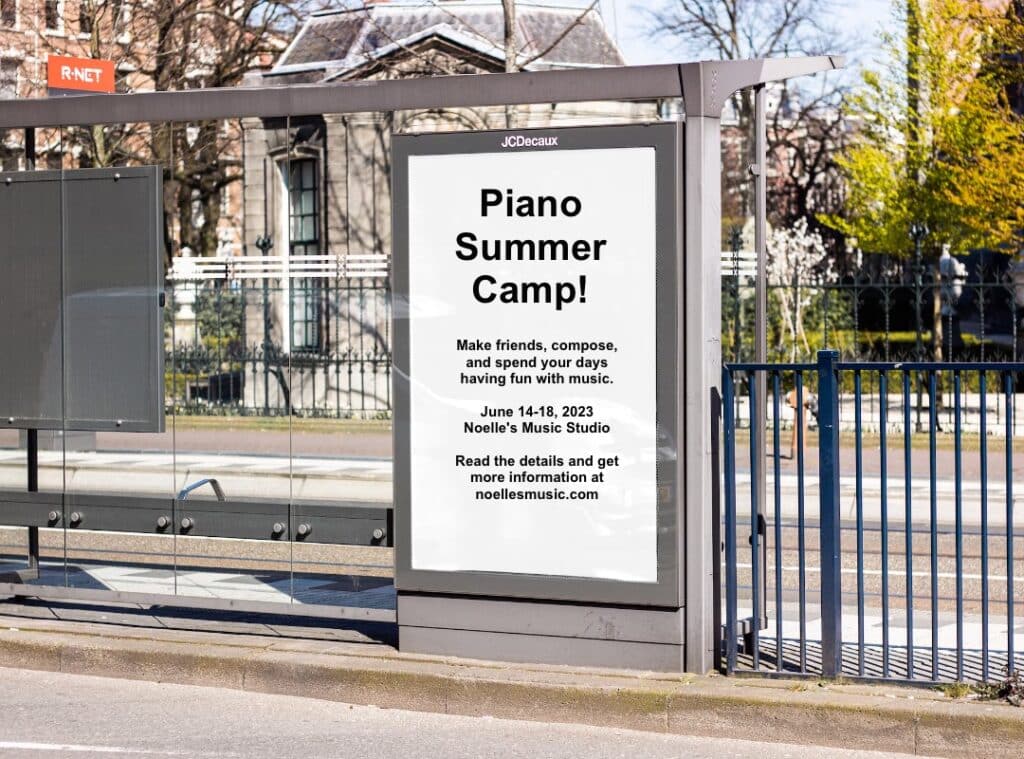
- The money spent on advertising the camp
Once you’ve figured out those numbers, you’ll have a better idea of how much to charge per student.
One thing to keep in mind: many parents can’t afford what it would cost to put their kids in a long day of music camp. And we find that most piano teachers aren’t doing full or even half day camps. Two hour camps are pretty common, but you’ll need to decide what you can handle!
How long should a summer music camp be?

The general length for most day camps is a week (Monday-Friday). However, many teachers only do Monday through Thursday. There are a few options that you typically see with day camps as far as the length of each day. Here are the ones I’ve seen most used:
2 Hour Camp:
10-12 or 1-3 Monday-Thursday. This is enough time to do quite a bit of teaching, skill sharpening, and having fun. But not so much time that students will need free time or will get bored. You’ll need to be very carefully planned for this to make sure you cover what you want to cover.
Half Day Camp:
9-12 or 1-4 Monday-Friday. If you’re letting parents choose between a half or full day, consider letting half day students have the choice of the first or second half of the day.
Full Day Camp:
9-4 or 8-3 Monday-Friday. Now, the only full day camps I’ve seen have been done as a collaboration between teachers. For example, a multi-teacher studio that has 2-3 other teachers or a camp in which there were multiple types of teachers (like an art teacher or pottery teacher) working together. So I wouldn’t advise doing a full day camp on your own. If you do something like this though, keep in mind that you’ll need to factor in how students are eating. Do you provide snacks, but students bring a sack lunch? On the last day will there be a big pizza party, but every other meal and snack is provided by students? Do parents switch off days they bring lunch?
Keep in mind that you want students to be with long enough that they’re able to really learn in the midst of games and activities. This means you probably want camp to be at least a few hours each day. Longer than a group lesson, but not so long that you are exhausted (though you’ll be tired no matter what).
What are your thoughts?
Have you ever done a summer camp before? Do you have any wisdom or helpful hints for teachers who are just starting one? We’d love to hear what you think in the comments!
