
In the last post on being a creative teacher, I talked about “how you can help yourself be creative.” But, some of the things I suggested take time, so I’m sure you’ll be interested in knowing some shortcuts to being (or at least seeming like) a creative teacher. So here is:
1. Get to chatting with the piano teaching community.
If you are on board with the real definition of creativity, then you’ll understand why this is important. We are building on ideas or elements that already exist out there. So, it’s important to get as many ideas in our heads as possible. Sift through them and find the ones that seem the most appealing and start with those. Even if you just use other teacher’s creative ideas the rest of your life, you’ll still seem like the most creative teacher on the block. But chances are, as you use them, you’ll get the itch to add your own creative flair and you can go through the suggestions on the “How Can I Be a More Creative Teacher?” post and work to make a new idea.
Now don’t misunderstand! I’m not encouraging anyone to steal an idea and claim it’s your own. That is stealing of course and a punishable crime. But rather, use the creative ideas of others and your students will think you are amazingly creative. And chances are, if you use those ideas, you’ll say new ways to adapt them, tweak them, change them, and be even more creative with them.
When you go to Facebook, just type in “Professional Piano Teachers,” “Piano Teacher Central,” and “Piano Teacher Funmakers” to find just a few of the groups. Request an invite and someone is bound to invite you!
2. Read the journals that are moving forward.
There aren’t a ton of piano teaching journals that are out there. But of the ones that are, I highly recommend Clavier Companion. Not only have past issues been evidence of their interest in moving forward, but I have inside information that assures me that they are also planning to be a leader in the area of helping teachers be proactively progressive in creative piano teaching.
I also enjoy reading the Australian Piano Teacher Magazine when I can get it. It’s really only available to Australian teachers, but you can find a few PDF copies of it online including one here.
3. Do an observation swap.
I did this once in my piano pedagogy program, but have also done it since then with a dear piano teaching friend of mine. We just find a time where she can come and observe some lessons that I give and I can come and observe some lessons that she gives. We both go away with very practical ideas of how to teach things and it’s interesting what you can learn about student interactions when you can watch a student without being a teacher.
4. Read the really great piano teaching blogs.
Okay, this is really important, but I just know that I’m going to overlook some really great blogs in the process of listing some for you. However, I want this to be very helpful for you, so I’m going to take a chance. Here are the blogs where I feel like I get some of the most practical, creative ideas:
- Diane Hidy’s Piano Teaching Blog
- ComposeCreate.com (that’s here!)
- Leila Viss’s 88PianoKeys
- Susan Paradis
- Jennifer Foxx – FPS resources
- Notable Music Studio
- Teach Piano Today
- Tim Topham’s site
- Color In My Piano
- Sara’s Music Studio
There are also great top level posts that really make you think like Elissa Milne‘s. There are other blogs that have been active in the past and are not anymore, so I’m leaving those out just for the sake of brevity.
And again, I’m sure I’ve left out some important ones, so how about you all comment below on great creative piano teaching sites that you love and that I’m forgetting! Then future readers start here with just a few of these fantastically, creative ideas and the look in the comments section for more!
5. Listen to your students.
Children are the most creative beings in the universe, so if you want a creative idea, listen to them. Ask them questions like:
- What do you like to do for fun?
- What’s your favorite toy?
- What do you hate to do?
- What’s the best part of piano lessons?
- Whats the worst part of piano lessons?
- What music are you listening to (that’s not piano lesson)?
- Etc.
Sometimes, just an informal interview like this with your students will give you just the right idea for creative teaching. For example, if they say they like to play with Legos for fun, then you can find all kinds of ideas for using legos in teaching rhythm or even just ask them to bring their Lego figurines to lessons and you can use those on the keyboard to find note names, build triads, etc.
6. No, I mean really listen and then jump into their world.
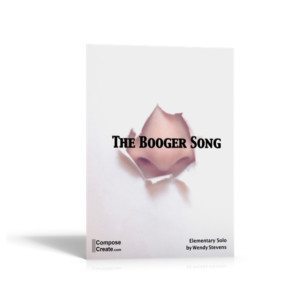 I’m serious about this. It’s one of my goals as a composer….to really pay attention and remember what it’s like to be a kid and to jump in and have fun with them. That’s why I wrote The Booger Song. Instead of just rolling my eyes, being disgusted and thinking about how my own kids needed to learn nasal etiquette, I decided to go ahead and laugh with them about boogers (since they are a real problem with kids) and instead teach them nasal etiquette while singing a silly song! Too much piano teaching music is written from an adult’s perspective already. Let’s try to have fun with kids instead of around kids. Read “Why You Should Be Talking About This Song.”
It reminds me of what one of my friends who is a counselor told me. She said that kids have real problems, but since parents already have their own answers to these problems, they tend to be dismissive of these problems. We need to let kids’ problems really be a problem and help them find their own answers to solving them. Only by doing this will we be empathetic, helpful, and kind.
There are more shortcuts to creative teaching, but start with these and you’ll be the most creative teacher on the block! I’d love to hear about your cheat sheet for creative piano teaching! Tell me what you do…
READ ALSO:
- Rhythm Cup Explorations – it’s hot in piano teaching right now!
- The Booger Song
- Summer Opportunities for Learning to Teach Creatively
Image by Hariadhi


Color In My Piano.com is another great site for teachers. I have found that the more I read creative ideas the more ideas pop into my mind. I have also used some great idea from one of the above sites with students and then the students come up with their own ways to change it around and all of a sudden we’ve “created” something else. Don’t ever let yourself think you’re not creative! And encourage as much creativity from your students as possible so they never have to wonder if they are creative or not — of course they are!!!
Great advise! I also like looking to the past to inspire creativity for the future. I’ve got a collection of old Etude Magazines that I love reading and re-reading. It’s interesting to find that many of the challenges of teachers are not at all new! This website has lots of their articles available:
http://etudemagazine.com/etude/teaching/
Color In My Piano is one of my favourite blogs too. Joy has so many great ideas and resources.
I also like The Teaching Studio (http://theteachingstudio.blogspot.com/) and Pianissimo (http://verypiano.com/)
And I love the Piano Teacher Funmakers Facebook Group – there are so many great teachers sharing advice, resources and ideas. It’s definitely worth joining if you want a creative boost!
Thanks so much for all the creative teaching ideas. I also hope that you would consider checking out my blog on The Student Music Organizer website….I’ve just started this year, but I have lots of great ideas to share.
http://studentmusicorganizer.com/blogs/main
I love your thoughts on creativity, especially since I have recently caught the composing bug, and have wanted to know how to improve my songs and teach my students to compose. One of my favorite youtube videos is this one on creativity that I thought you may enjoy:
http://m.youtube.com/watch?v=5TZni3qX8gs