

If you clicked on this article, you want to know how to have less stress during the holidays. But it’s not always the holidays themselves that are stressful, but the preparation that’s stressful too.
Of course there are parties – but you can never just show up! You have to provide food, gifts, or both. Then, there are family gatherings. With a spouse, that means two families (or more, depending on your family). Plus siblings have families, kids get married, and suddenly a simple Christmas dinner requires the planning and execution of a top-level security mission!
There are specific things a piano teacher can do to lessen the stress in their studio – see this Idea Share for even more ideas. But a more strategic overarching plan is necessary to really make a noticeable difference during the holidays.
I felt this stress deeply and with growing urgency until a few years ago. I started doing something that changed my attitude and stress level around the holiday season (and really every other season of stress-inducing activities!).
The Art of Saying “No”
First, let me tell you that I am not someone who says “no” easily. My natural tendency is to be people-pleasing to the point of draining myself of all energy and resources. Learning to say “no” was not only difficult for me, but left me having major anxiety the first few times I did it! If this sounds like you, I’m here to tell you, it does get easier. I now rarely feel anxious about telling someone no, and saying no has even started feeling natural! So be encouraged if you are someone who just can’t say that two-letter word.
The Wrong Way to Say No
Here’s what my “no” used to sound like:
I’m so sorry, I just don’t think we can make it work. My husband has a work party that night, and my neighbor asked me to also water her plants while she’s out of town, and….
There are problems with this way of telling someone “no”. First, it’s unfair to others because it’s a little unclear. Clear is kind but concise is kind as well. They don’t need (or want) to know my schedule.
Second, this detailed response is unfair to me. If I’m giving someone a million reasons why I can’t make it, it’s because I feel like I need to justify to them and to myself why I can’t be there. The reality is – I can’t be there because my calendar just doesn’t have room for it. Or because I don’t feel like it. Or because my toddler is having a rough week and needs some extra mom time.
All of these are equally valid reasons to say “No”.

Saying “no” is the single greatest tool in my “tackling the holidays” tool belt. It has worked wonders for me and my family. I truly look forward to the holiday season, instead of feeling drained and stressed.
The Right Way to Say No
But as I said, there is an art to saying “No”. Some people can just say it flat out. I am not one of those people. There’s a way of telling someone “no” that I learned from Wendy (from this workshop and here’s a good saying no article about it as well), and then continued to learn about from books and podcasts.
When someone asks, “Can you make it to the Christmas party?”, my response is,
“Thank you so much for the invite! I can’t make it this year, but I really appreciate you thinking of us!”
This works because it’s clear: they know I can’t make it.
It’s kind: I let them know I really appreciate it, and thank them.
It lets them know it’s not a forever “no”: I can’t make it this year. Next year, I may be able to!
The “yes, but…”
Many activities during the holidays fall under the “yes, but…”. This means you may be able to make something work, if it’s tweaked slightly. This obviously doesn’t work for something like a party someone else is planning. If you can’t make it at the specified time, you can’t ask them to change the whole party around. But it can work for things you are responsible for.

For example: my daughter’s birthday is a week before Christmas. I will say “yes” to her having a party, but we only do one every other year. And instead of making food for everyone, I order pizzas. Events and activities don’t have to be perfect to be good, joyful, and memorable. If something needs to fall to you, is there a way to make it simpler so you have less stress during the holidays?
Proactively Prioritize
Because saying “No” is important to having less stress, my husband and I talk about the holidays before they ever come up. That way we know what the expectations are ahead of time, we know how much available time there is to say “yes” to things, etc.
Here’s the formula we use to prioritize what we say “yes” or “no” to (don’t I sound like I’d be fun at parties??)
The Eisenhower Matrix
I have prioritized my to-do list using the Eisenhower Matrix for years, and it works well for calendars too! The idea is that there are four categories:
- Urgent and Important
- Urgent but Less Important
- Less Urgent but Important
- Neither Urgent nor Important.
- You can read more about it (and even watch a helpful YouTube video) here.
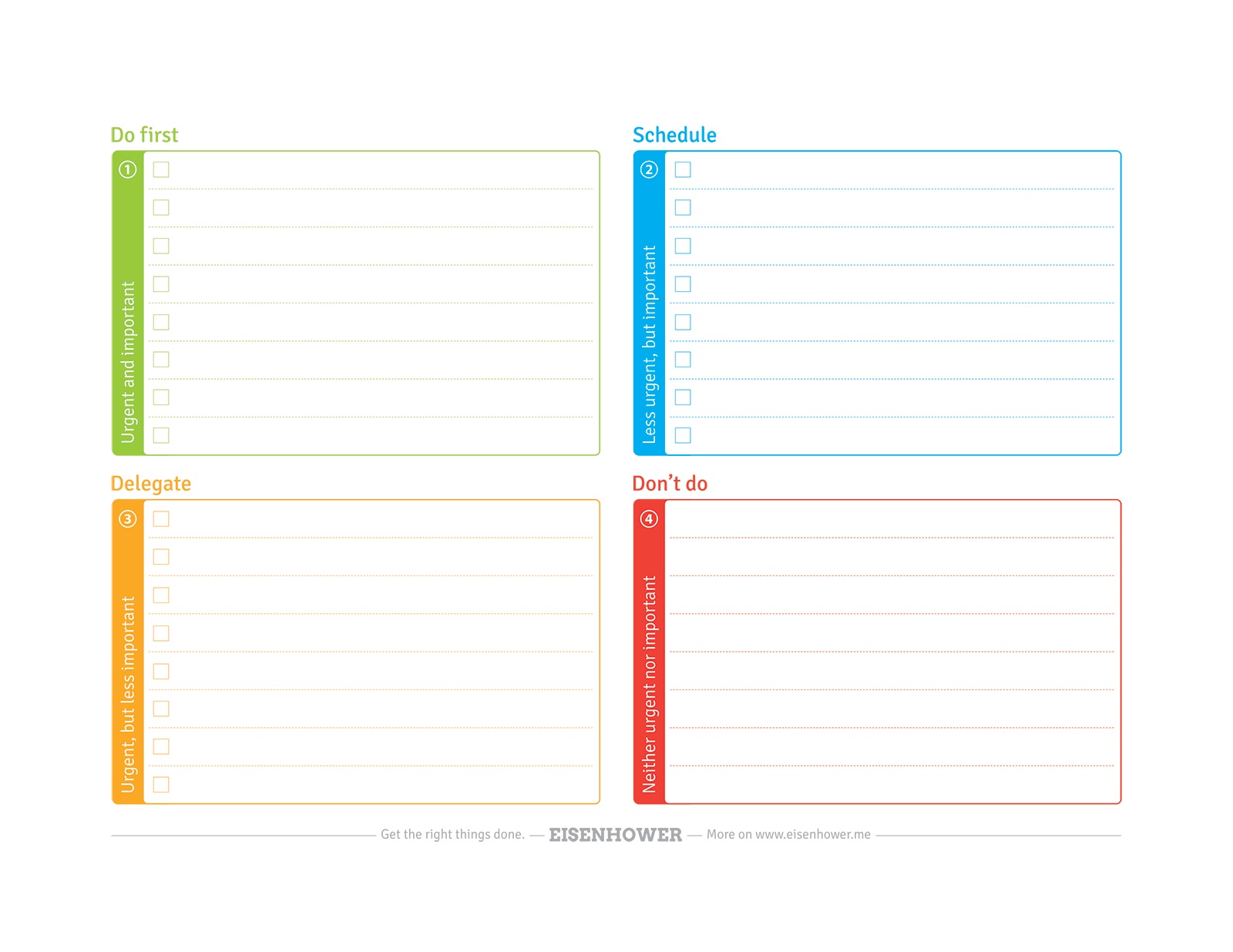
My husband and I use these categories to filter events and activities. For example, something like an upcoming Christmas recital may be under the “Urgent and Important” list. But a white elephant gift exchange for someone you may not know well may fall under the “Urgent but Less Important” category.
I like categorizing things in this way is because it makes sure we leave room for things the world may not view as “important”, but we as a family take very seriously. Every year, we go to the mountains to cut down our Christmas tree. That’s an important tradition that is technically not urgent- but it’s important! That means it actually takes precedence over something “Urgent, but Less Important” (see the chart above).
Putting events into categories makes sure both my husband and I are aligned on what is important to us. It makes saying “yes” or “no” feel more peaceful, more clear, and leaves us with intentional holidays. It’s not a perfect system, but it’s one that works for us!
Not everyone needs to be this organized, obviously! It may not be realistic for you to have a meeting with your family to discuss these things – but even the simple act of mentally putting a “filter” on when it comes to holiday invites or obligations is so helpful.
I hope your holiday season is filled with joy and peace. Thank you for spending some of it reading about how I organize our holidays – I hope it helps you with yours!
Want to Get These Articles In Your Email?
If you are a piano teacher and want to know when articles like these get published, please join our email newsletter! We send out weekly newsletters with articles, new music notifications, free webinar opportunities and free teaching resources! We’d love to have you a part of the ComposeCreate® community.

