

I started piano lessons at seven years old, and my parents told me I would be required to take lessons until I was 18 or until I could sight read any piece they put in front of me (my parents were not musicians – ha!). I fought them on this agreement many times, and as I’m sure you’ve guessed – turning 18 happened first.
For a long time, I thought I must not be a very good musician because I was a horrid sight-reader. The truth is that I was never taught how to sight read in my younger years! However in college, my teacher not only gave me the tools to sight read, but showed me how to use those tools. That made all the difference!
As a teacher, I understand the importance of learning to sight-read, but I’m not always sure how to best teach it! But the first round of Music Minis™ have already been an effective and fun way to improve students focus and teach sight-reading. So I’m excited to use these new sets as well!
What are Music Minis™?
Music Minis™ help students learn to process and understand the details in music by focusing on the most important building block of music: the music motive. Isolating the motive forces students to process the details before attempting to play. By pro-actively working on this skill, we can help our students learn to process details more quickly, thus helping them establish habits that help them be successful in reading and sight reading.
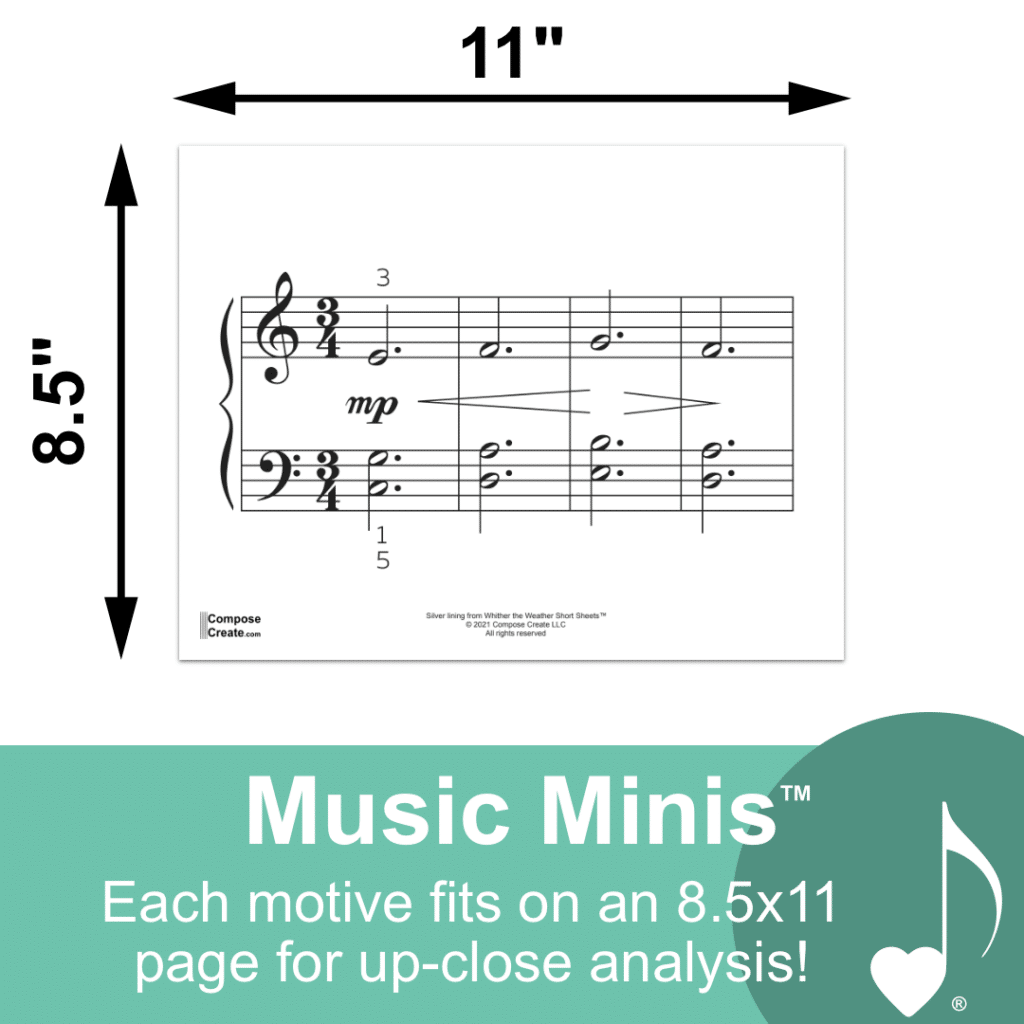
Music Minis™ are large, 2-4 measure motives from ComposeCreate® pieces. These are not random notes or unmusical exercises, but are snippets of exciting music that students play in real life – motives from real pieces! Each Mini™ fits on an 8.5×11 piece of paper, so students aren’t distracted by extraneous details, notes, etc.
This isolation of the motive absolutely helps to increase focus, especially for younger students! The same way the Rhythm Menagerie Curriculum focuses on rhythms that feel natural and musical, Music Minis™ focus on real motives so students learn to look for more than just notes when sight-reading (more on that below!).
How Can Music Minis™ Improve Sight-Reading and Focus?
There’s already an important awareness of sight-reading as teachers, but many times we forget to focus on the first steps of learning how to sight read. Because sight-reading is something that we as teachers do so frequently and automatically, we often forget it needs to be taught! We forget that the first step of analysis happens quickly and within seconds for us as experienced pianists. What key are we in? Are there accidentals? What’s the time signature? Where do my fingers go? Details like key and meter changes, or how many times the motive is played throughout are often picked up after a quick glance.
But this quick analysis just isn’t the case for beginner or maybe even intermediate students!
We often make time in the lesson for students to sight read, but have we taught them how to sight read? Have we taught them how to do this quick-glance analysis? Do they even know what they are looking for or what they need to notice? This quick-glance analysis is what we need to teach, not just provide opportunity for them to sight read. Once they learn to quickly process these details, sight-reading will become easier and more accurate.
Showing students an entire piece of music can very overwhelming. But Music Minis™ gives you a chance to “zoom in” on what students can analyze in a piece of music without looking at the full score. These motives help you teach student what’s important and what to notice without all the other distractions. Every detail in Music Minis™ is pulled from the original score: dynamics, time signature, accidentals, even fingerings. So you can know that what you are examining is exactly what’s in the music. Even if the student doesn’t learn that piece, it helps them know what to look for in every piece of music they learn.
Because the Music Minis™ are pulled from ComposeCreate® pieces, it’s also a wonderful opportunity to have students deep dive into the motive of a piece on which they are working! Once they’ve learned to analyze music in a small motive, it’s easier to take that information and apply it to the rest of the piece.
How Do I Use Music Minis™?
There are so many ways to make music analysis fun! Below are a few ideas, but this list is definitely not exhaustive.
Watch this video to see Music Minis™ and many of the activities demonstrated:
- One Minute Challenge: Ask the student to name as many details about the music that they can in one minute. Ding a call bell for every detail they get correct.
- Where Am I? If you have the corresponding piece (see tune index and the bottom of each card), ask the student to find the motive in the music. Then play the actual piece and ask the student to ding the bell every time they hear or see the motive or a variation of it.
- Back-and-Forth: Take turns with your student going back and forth naming facts about the motive. This could be things like the largest interval, what finger would be used to play a particular note, etc. Whoever can’t think of any more facts loses, the other player wins!
- What’s Next?: Have the student study their Music Mini™, then play the motive. Ask them if they can guess what note is next in the actual piece.
- What’s the Story?: Tell the student the name of the piece and then ask them to come up with a story for it. This is one of my favorites because it often leads to even more discussion about analysis. How would you make the piece sound intense here, what would you do to make it sound minor, etc. Using imagination to sneak in some theory is a wonderful way for kids to learn!
- Transposing: Transposing an entire piece is very difficult and overwhelming for students, but once students feel comfortable playing in the original key, you can have them transpose just the small motive to another key!
- Rainbow Analyzing: My students love gel highlighters, and are excited for any activity that uses them! I have a pack of 10, and challenge students to find 10 different things they can highlight in a motive. Ex: The time signature is red, all quarter notes are orange, all pedal markings are yellow, etc. If you laminate these cards, you could use dry erase markers to do this kind of highlighting.
- Be the Teacher: Once a student has analyzed a motive and feels comfortable playing it, assign them to teach a parent or sibling the Music Mini™ motive during that week.
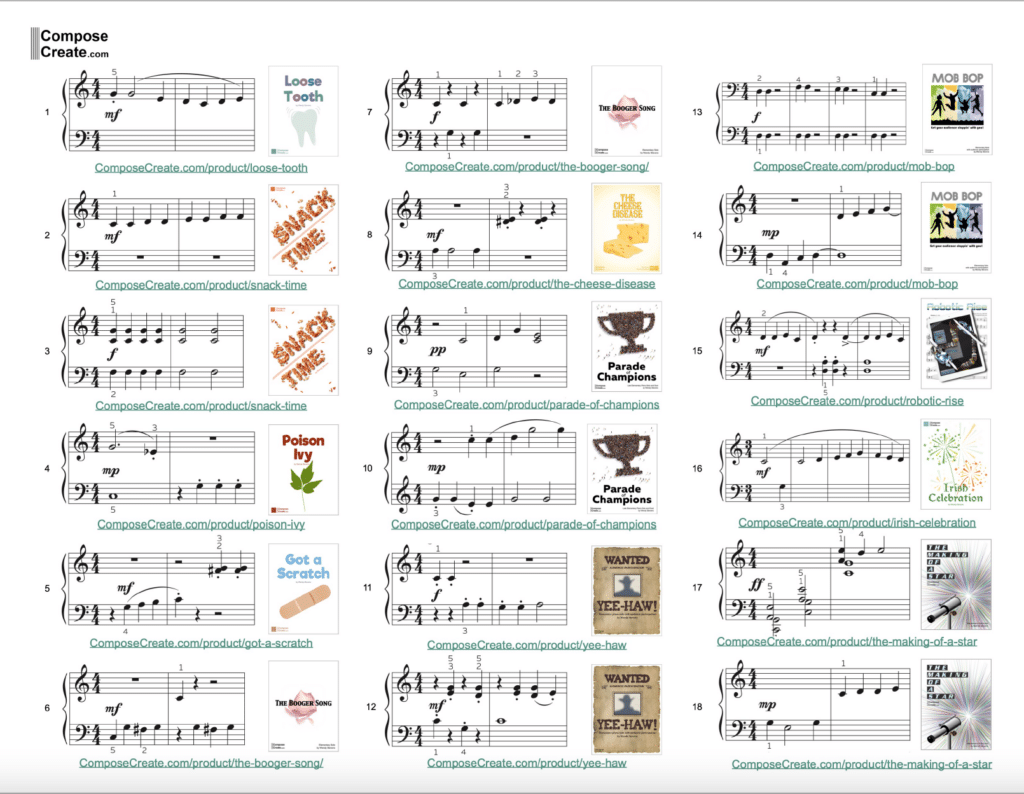
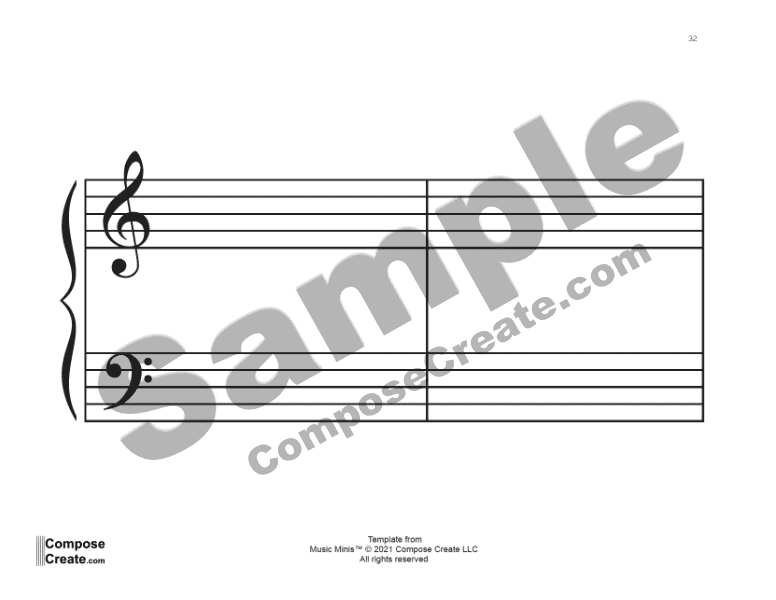
One extra thing included in the PDF is a template in each Music Mini™ file that’s blank. This means you can fill in your own 2-measure motive, or have the student do it as well! There is an index at the front of the PDF that shows which piece corresponds with the Music Mini™ you’re working on.
Music Minis™ Available:
We have three sets of Music Minis™ available. An elementary set, a late elementary set, and a discounted bundle with both! We will have more in the future!
-
Product on sale
 Music Minis™Price range: $9.99 through $73.96
Have you used Music Minis™ with your students? Do you have any sight-reading tips or tricks that seem to help your students? Let us know in the comments!


Such helpful and fresh new ideas here for making familiar concepts exciting…thank you!! This is super! 🙂