
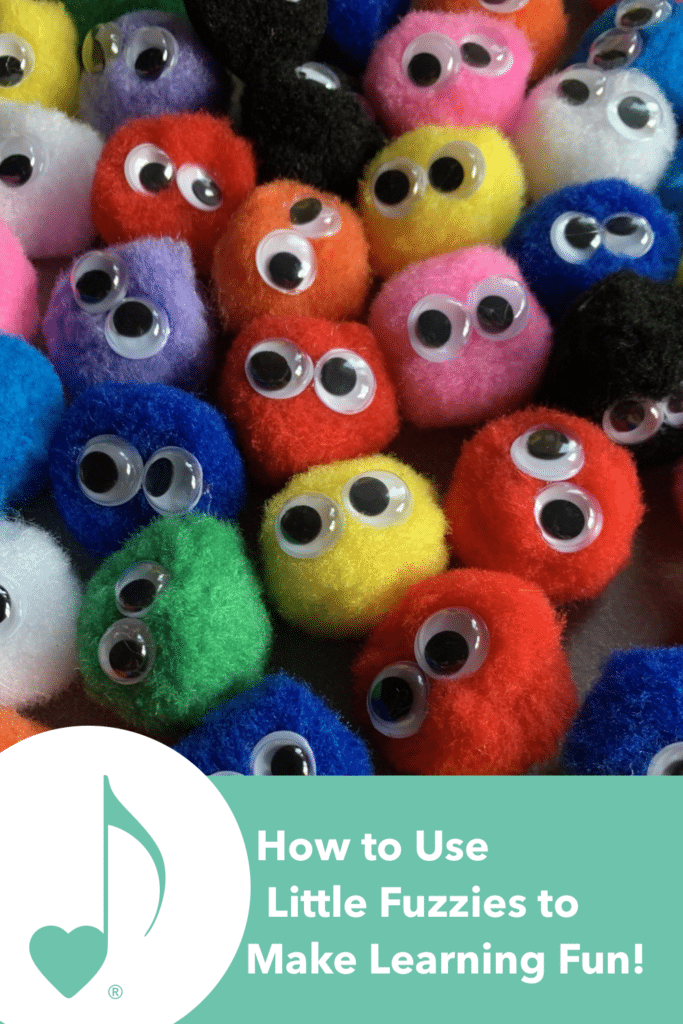
“Little fuzzies everywhere; great big eyes and lots of hair. No teeth, no mouth anywhere, watching me with quite a stare!” Our latest Little Fuzzies piece is all about these little balls of fluff with giant eyes. But they’re more than just a song – they also make wonderful teaching manipulatives.
Where Can I Get Little Fuzzies?
You can purchase pre-made Little Fuzzies here, but they’re simple to make (and less expensive!) with a few supplies.
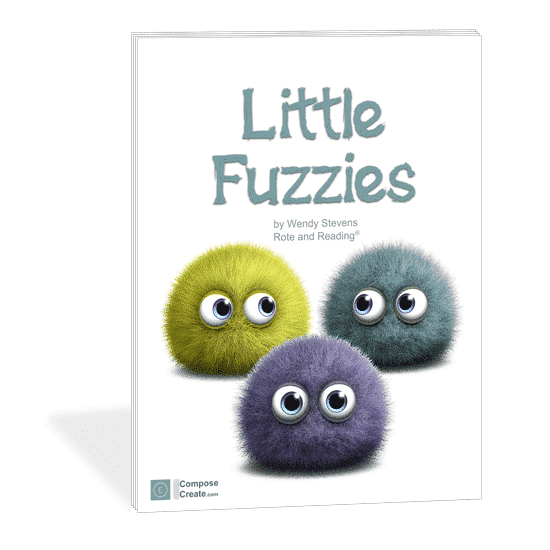
How to Make Your Own Little Fuzzies
To make your own Little Fuzzies, you need:
- Pom Poms (these are the ones I purchased and they worked great!)
- Googly Eyes. I had some in my craft closet, but these would work wonderfully.
- Hot glue gun
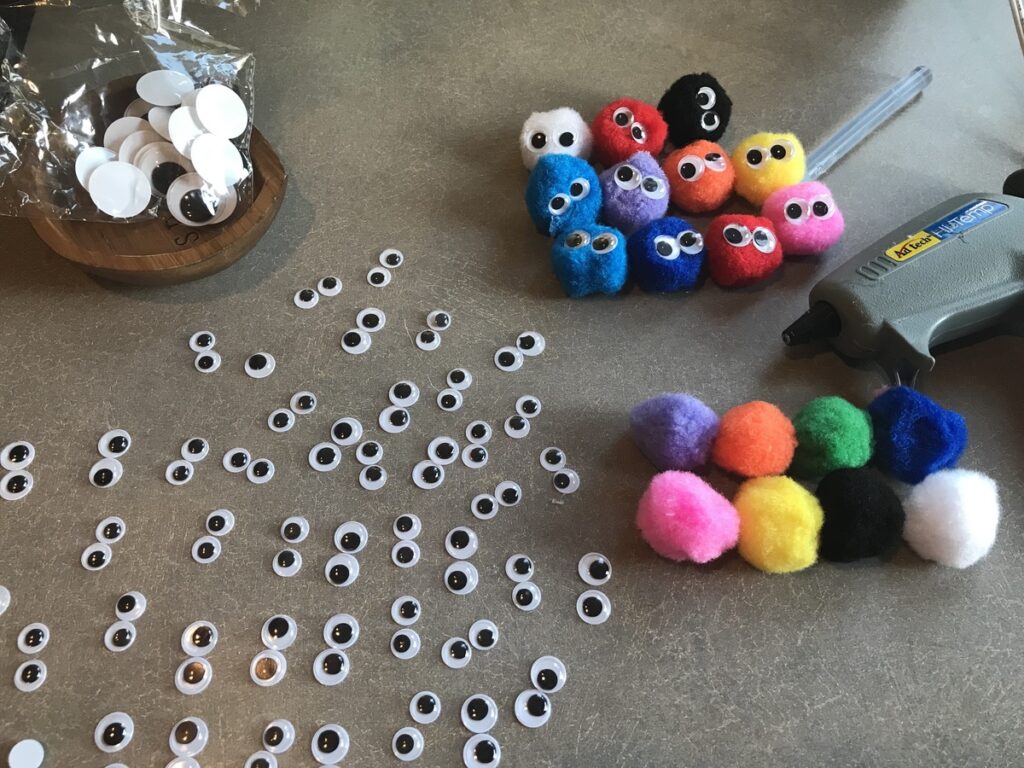
Simply glue the eyes to the Pom Poms, and they’re done! I created an assembly line and pumped out 100 Little Fuzzies in about an hour and a half. Note: Wendy also created these with eyes that were stickers, but she said that they really needed to be glued as the eyes just didn’t stick that well without glue.
How Can I Use Them in Lessons?
There are so many ways to use these. Here are just a few ideas that I know work well:
- Name the Note. This is a wonderful game to play, especially if your beginning student is playing the song Little Fuzzies. Give your student several Little Fuzzies, call out a note, and and see how quickly they can place the little fuzzy on the correct note.
- Hand Position Prep. The piece Little Fuzzies moves around so that students don’t get “stuck” in a particular hand position. However, it can take some practice for them to move those hands quickly! Use Little Fuzzies to show your student where their hands will be moving, and have them place the Fuzzies on the notes themselves. This exercise in seeing the notes ahead of time can help immensely.
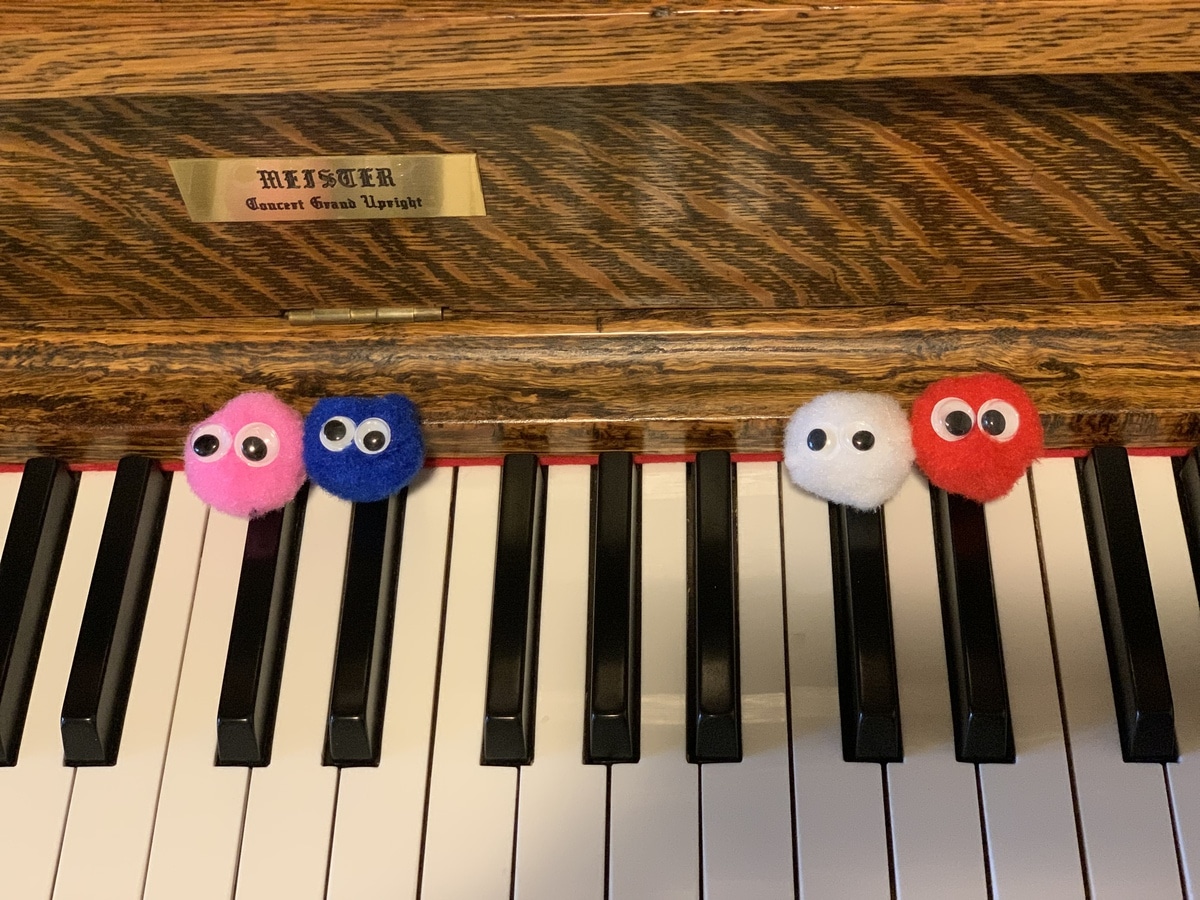
- Little Fuzzies Audience. A student of mine struggles with playing a piece without getting distracted or stopping to talk. I grabbed a handful of Little Fuzzies and set them up as his “audience” during a lesson – and it worked! Having those buggy eyes staring at him gave him the motivation he needed to play through the whole piece.
- Match the Notes. Using a white board or piece of paper, have each colored Little Fuzzie correspond with a note. (Ex: the red ones are C, the green ones are D, and so on). Have the student pull a Fuzzie at random out of a bag, and reference the key to see where to place the Little Fuzzies.
- Little Fuzzies Adjudication. Much like the audience, this “game” has Little Fuzzies watching for something specific. For example, I’ll place a Fuzzie next to a student’s music, and say, “This Little Fuzzie is going to be watching for dynamics while you play these measures”. After playing the measures, I’ll ask, “What do you think the Little Fuzzie would say about your dynamics?” Sometimes you’ll get a smart answer (“They would say I’m the greatest piano player ever!”), but most of the time students are surprisingly honest, and give incredibly in-depth answers!
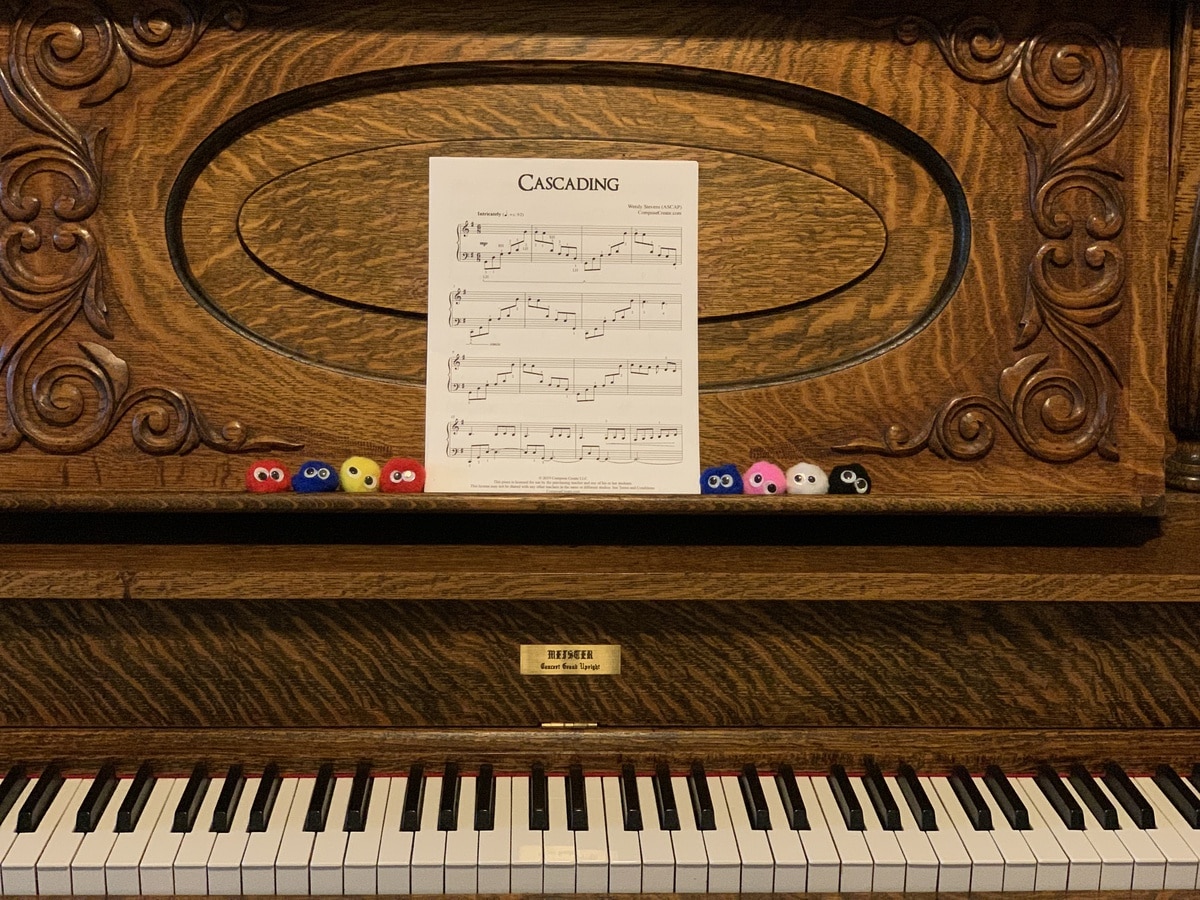
- Interval Naming. This game also pairs well with our Giant Interval Flashcards! Place a giant flashcard in front of the student. The student then places Little Fuzzies on the corresponding keys on the piano and names the interval. (Ex: If the flashcard shows a 5th from treble C to G, they’ll place the Little Fuzzies on those corresponding keys).
- Chord Inversions. Little Fuzzies aren’t just for our young students – they make a wonderful visual tool for teaching concepts to older students! Give students 3 Little Fuzzies. Call out a chord and inversion (ex: G first inversion), and have students place the Little Fuzzies on the correct note.
- Hand position. Placing a Little Fuzzie underneath a students hand can help them round their hand shape! Ask them to pick their favorite fuzzie and then place it under their hand while they play a stationary piece (or insert it as you see their hand collapsing). “Don’t squish the fuzzy!”
How Can I Use Little Fuzzies In The Classroom?
Giving students something to hold can really help increase engagement. Music can feel very abstract, especially if students are older and have no other exposure to it beyond the classroom. Having manipulatives can make it feel more “real”, and it always makes for fun games! Here are a few:
- Giant Staff Toss. If your classroom has a giant floor staff, this is a wonderful game (if you don’t, make one from duct tape!). Split students into two teams. Have each team form a single file line in front of the staff, with each student holding a Little Fuzzie. Students will toss their Fuzzies onto the staff, and have to name the note correctly before letting the next person come up. This is a relay race of sorts, so the goal is to have everyone go as fast as they can. The line who gets through all of their Little Fuzzies the quickest is the winner! Note: If you know several students in the classroom are in band, choir, or take private lessons, please make sure to evenly distribute those students between the two teams as much as possible so it’s a “fair fight” between the two teams!
- Singing Rounds. When teaching students to sing rounds, it can be tricky as the teacher because you can’t sing both parts simultaneously! Have two different colored Little Fuzzies, each Fuzzie representing a different group that will be singing. Have a piece of paper that matches the Little Fuzzie hanging above the group that will correspond with that color. Then, you can hold up the Little Fuzzy when it’s that colors turn to start their round. I’ve been able to get a round going in three separate parts with a fourth grade class using colored manipulatives like this, so I know it can really work!
- Musical Question Chairs. This game works somewhat like musical chairs, but start with the same number of chairs as students (instead of one less like you would with traditional musical chairs). One chair will have a Little Fuzzie sitting on it. When a student lands on the Little Fuzzie chair when the music goes off and everyone sits, they have to answer a musical question you’ve written on the board. If they get it correct, they’re still “in” and the game keeps going. If they get it wrong, the chair gets pulled and that person is “out” – and the Little Fuzzie goes onto another chair!

These Little Fuzzies have so many fun possibilities, and I’m excited to see how else I can use them. It seems like the more I use them, the more ideas I come up with! Do you have any fun games in your studio or classroom that you could use with these? Let us know in the comments!
Want to Get These Articles In Your Email?
If you are a piano teacher and want to know when articles like these get published, please join our email newsletter! We send out weekly newsletters with articles, new music notifications, free webinar opportunities and free teaching resources! We’d love to have you a part of the ComposeCreate community.


I have been using pompoms in my lessons for years. I started using them to mark the keyboard after several dimes, pennies, bingo markers, and a jelly bean ended up inside my piano. (My piano technician dreads a call to my house.) I never thought of calling them fuzzies or giving them eyes. My students are going to love this! I also can’t wait to start some students on the fuzzy song. They are going to think it was written just for my studio.
Thanks for leaving that comment, Beth! I’m so glad you can use this piece and that it’s tailored to your studio! You can tell your students you know the composer! 🙂
I love the possibilities for the fuzzies. What size of Pom Pom did you use for your DIY? Our craft store carries 1” and 1/2” sizes. The 1” might be a tight squeeze on the key but the smaller wouldn’t be big enough for helping hand position.
I think my students will really enjoy Little Fuzzies (both the song & the fuzzies themselves!)
What about this idea? Have the student decide the location of the starting note for the song they’re about to play. Then they can place a Fuzzie on the starting note(s).
Or the teacher could put a Little Fuzzie on a note (right or wrong) indicating this is the first note of the piece & let the student decide if the Fuzzie is in the right place or not.
Great ideas, Gayla! There are so many creative ways to use these and I love your ideas!
I’m getting inspired by all these comments. If you were to teach the Little Fuzzy songs by level fro easy to progressively harder, what would that look like? I’m thinking of doing a Fuzzy sumer camp. Like I said, I’m getting inspired. 😉