
I wanted to revive the Composition Corner Q & A segment since I’m getting all kinds of questions via email and Facebook, especially about composing difficult rhythms for students who can create them but not read them. Recently, Becky asked me on the ComposeCreate FB page:
I just finished working with my students and submitting their compositions to our state composition festival (Indiana). Three of my elementary students composed pieces where I had to help them with their more complex rhythm (and boy – some of the rhythms were indeed complex!). My question is, in your opinion, should I have encouraged them to stick with only rhythms they could notate?
Becky, let me first congratulate you on helping your students compose and notate their compositions. I am quite sure that they are much more interested in piano than ever before since they are not only performers, but composers of their own music now! You are developing life long musicians when you encourage them to make the piano and music their own!
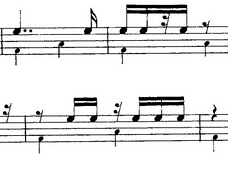 In answer to your question, we know that kids can feel and “do” rhythms much more complicated than they can notate, so it’s great to just notate what they have written yourself, show them what their rhythm looks like (they’ll be amazed), and NOT ask them to read it. That’s why I don’t encourage my students to notate their compositions when they are young and am very careful to help them only as they are ready. See this question on notating compositions.
That said, the phrase you used “rhythms were indeed complex” might be an indication that they could use some help in developing their ideas to be congruent through their piece. If they have one complex rhythm that’s repeated, that’s one thing, but if they are using a variety of “unique” rhythms, that’s probably a sign that their piece needs some work in developing just one or two rhythmic and ideas so that the piece has flow. However, you have to be careful how you approach the student especially if they bring in their piece already completed and don’t seem to want to change anything. See this article: What Do You Want Me to Do?
Many times, if a student brings me a piece that has multiple issues (too much material, not enough repetition, rhythms that have no flow, etc.), then I’ll just pick 1 thing to help them improve and leave the rest. Make sure that you “find something positive” and then you might say, “You know, I think that you could just tweak this a little so that it sticks in people’s minds even more!” Then, you can talk about how people need repetition (shift the focus vs. how bad their piece may sound) in order to remember a good idea.
Do you have a question you’d like to ask about teaching composition? Questions about composing difficult rhythms? Email me and I’ll be happy to help!


This is a very interesting topic for discussion. I have had this same issue with students on all levels, even older beginner students who already had songwriting experience prior to taking piano lessons. I believe this is a wonderful opportunity to show & establish the rhythmic connection between the ears, eyes, & the brain.
Typically, I will focus on just one phrase a week. First, I have the student sing or hum the melody that they hear in their head. Make sure to record this in their lesson so they have a reference for later – actually, record every step of this process. Then I will have them tap out the rhythm. Next, I show them out to figure out the tempo of the song (establishing the correct meter). At this point, I will usually write out most of the rhythm (no pitches) and draw vertical dotted lines showing where the primary beats are so they can see how the rhythms ‘fit’ inside the measure and beats. Then I will let them work out a smaller section by themselves, guiding them along the way. What’s really cool is when I show them how to input this into Finale and then they see how professional it looks.
Composing and interpreting rhythmic phrases are the best ways to start students and to teach them to love music. Rhythm organizes music and clarifies how we feel and remember it. Those of you who know and use my Introduction to Music (the first book in our Artistry at the Piano course) find that students are excited to be making and exploring their own music from the first lesson onward. The simple rhythmic phrases in the Introduction to Music are clearly patterned but also carefully crafted to teach the sense of flowing motion to a point of completion (cadence). I ask my students to decide on at least three different interpretations of the phrases in the book. Then I ask them to make up a rhythmic phrase, using ourrhythmic figure flash cards that provide metric units to help them organize their musical thinking. They must decide on at least three different interpretations of their own phrases. Then we vote for the “most interesting” interpretation, and why it is especially interesting. As you can imagine, these students learn the basics of rhythm, phrasing, and interpretation in such a way that their own compositions reflect their comprehension and involvement in making music. Thus their reading and composing of music grows naturally and rapidly!
I am heartened to find your blog, Wendy, and the comments from your readers. This is exactly what my late husband, Jon George and I wanted teachers to discover and use freely in their teaching, Congratulations!
Mary, I am honored to have you comment on the ComposeCreate blog! Thank you for taking the time to weigh in on this matter. Your comments above really pique my interest and I’m going to look at the Artistry at the Piano course again now that I hear your careful explanation of the “sense of flowing motion to a point of cadence.” I love this idea and will be investigating further. Thanks so much. Your comments are always welcome here!
Thank you, Wendy for using my question! I definitely followed through with letting those few students stick to what they had composed, even though the rhythm was more complex then they are currently able to read. All three students approached their pieces with one complex rhythm pattern (thank goodness!) that was repeated throughout their compositions.
We are now awaiting the results of the judge!
Thanks for asking the question Becky! I expanded my answer a bit more from what I wrote on FB. That’s great that they kept their rhythm consistent through the composition. Keep me posted on how they do!